Research tools for labs and facilities.

SashSense helps you track sash position across your fume hoods and review fleet energy estimates. We also build research instruments and help teams plan experiments and budgets.

SashSense Duo primary sensor and activity companion

SashSense Duo

Sash position and activity sensing for fume hoods.

Inside the research bench

A Radiacode instrument records radiation measurements. A Jetson computer processes them. Explore the equipment and the connections between them.

Jetson + Radiacode · Hardware study

Research & development

Mathematical field · Motion study

We develop the instruments, software, and evaluation methods a research project needs.

  • Experimental systems

    Sensors, firmware, acquisition, and telemetry.

  • Analysis & evaluation

    Data workflows, reproducible testing, and technical review.

  • Research delivery

    Proposals, coordination, budgets, and reporting.

Collaborative research

Our team’s university research experience includes adapting sensing hardware built by other researchers and documenting how the changes affect the data.

Explore the sensing research

Proposal development

Nuclear research

Our team’s research experience includes contributing to a successful proposal for nuclear research.

Research experience

Selected projects

View all work
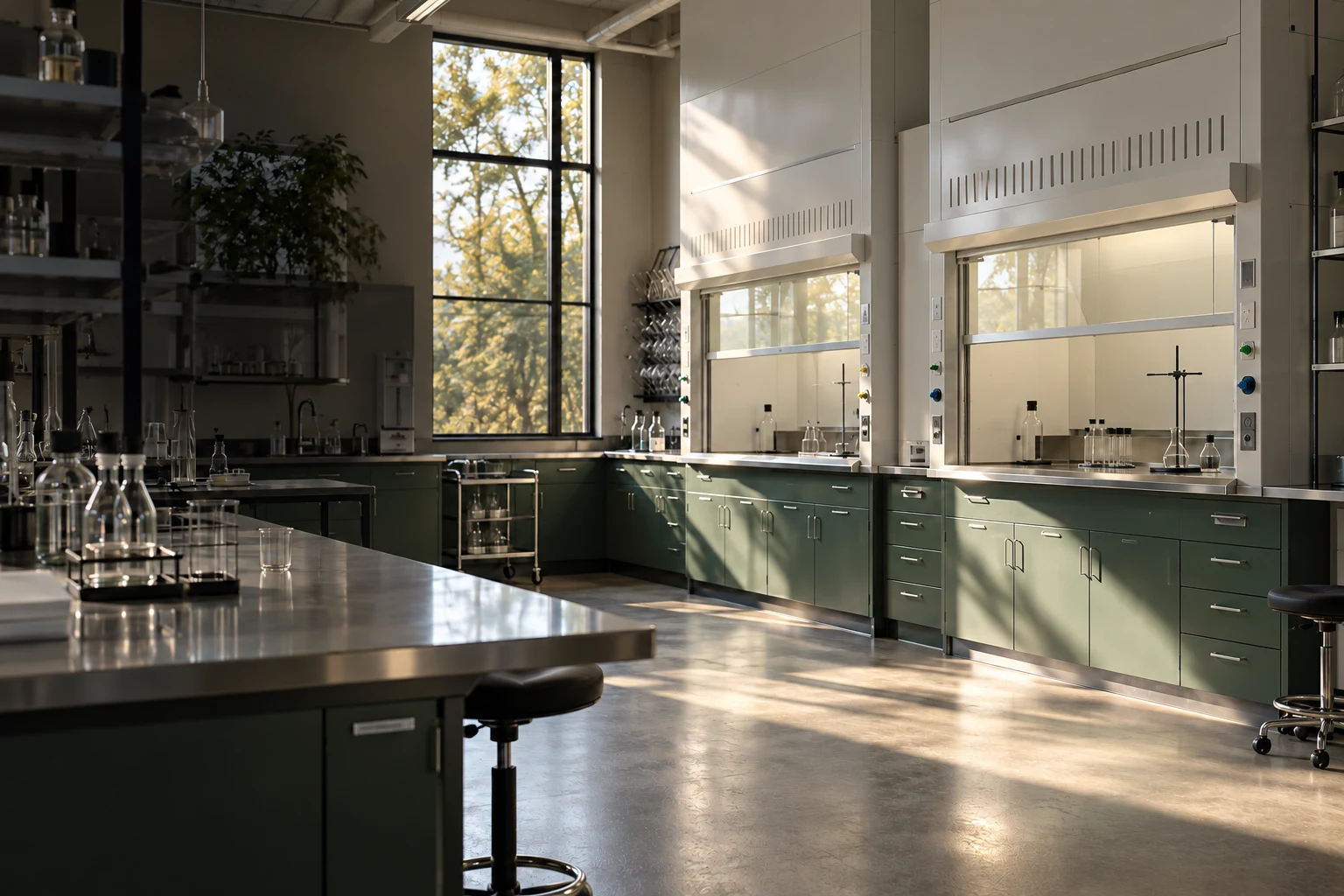
Laboratory benches and fume hoods
Laboratory fume hoods · Application setting

MSA / Product development

SashSense

Sash position and activity sensing for laboratory fume hoods.

System
The primary sensor tracks sash position. Its companion records nearby activity so facilities teams can review how a hood is used.
Status
The dashboard is live. Hardware is in development. We confirm availability and delivery timing when we review an order.
Explore SashSense Place an order
Radiation research prototype architecture Two implemented paths: detector spectra feed deterministic measurement processing, while reference documents feed local retrieval and AI. A desktop research interface provides session history, source citations, spectrum exports, and records. A separate offline replay adapter and evaluation workflow preserve measurements and review attempts. Diagram of software components, without performance results or a claim of operational validation. RADIATION RESEARCH / ARCHITECTURE Detector spectra Reference library Deterministic processing Dose · uncertainty Session accumulation Retrieval & local AI Source passages Cited responses Research interface Sessions · citations · spectrum exports Measurement records & saved traces Offline replay & evaluation Record adapter · repeatable review
Implemented components · Offline replay shown separately

Collaborative university research

Radiation research

Working prototype

Radiation sensing, deterministic analysis, and local AI in an integrated research prototype.

Engineering
An embedded backend and desktop interface connect detector acquisition, source retrieval, cited responses, and saved session records.
Evaluation
Repeatable tests and a separate replay layer make measurements, model responses, and review decisions available for inspection.
Explore the prototype

Working together

01

Tell us what you need

We start with the question you’re trying to answer and what you already have.

02

Agree on the work

We put what you’ll receive, the schedule, and the fee in writing for you to review.

03

Build and review

We check in as the work develops and keep a record of the decisions we make together.

04

Walk through the results

We walk you through the finished files and the records behind them so you can use them yourself.

Tell us about your project